APS-MCC : What Does a Typical Training Day Look Like
In brief
- One APS-MCC session = briefing + 4h simulator + debriefing
- 10 sessions total to reach the required 40 hours
- Progression from procedural (sessions 1-3) to realistic LOFT (sessions 4-10)
- Final assessment on the 9 EASA competencies
- At Iroise: preparatory e-learning before each session, SBT scenarios, CBTA debriefing with facilitation, night sessions when scheduling allows
Before you arrive: flight preparation
The briefing has a fixed time. But your day starts earlier.
At most ATOs, you receive the flight details in advance: airports, weather, mass and balance, NOTAMs. You prepare your flight as you would at an airline. You calculate fuel, brief the approaches, anticipate constraints.
If you show up unprepared, you waste time. And more importantly, you miss the chance to practice what will be your daily routine on the line: ground preparation.
The briefing: setting the framework
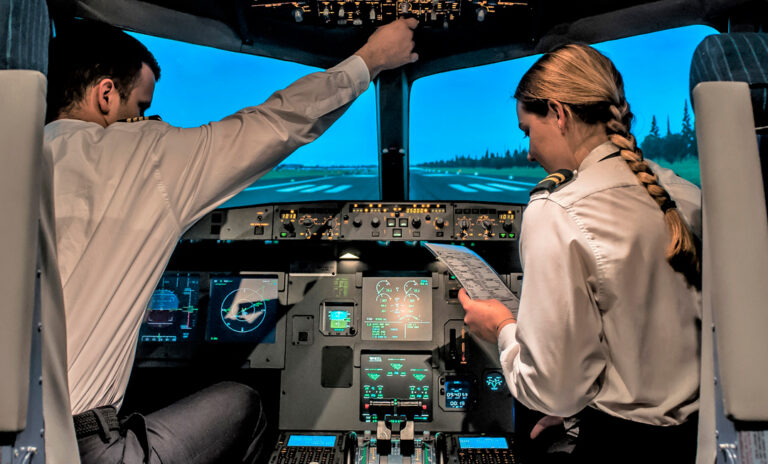
The briefing aligns everyone before entering the simulator. The instructor reviews the session objectives, the situations to be worked on, the key focus areas.
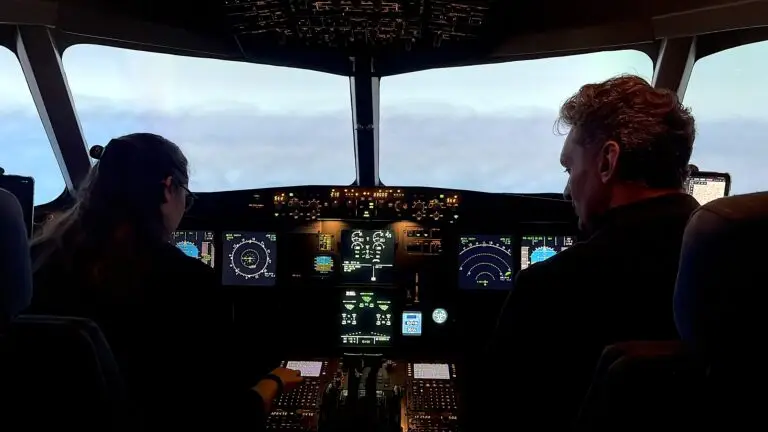
With your sim partner, you confirm role distribution. You review SOPs. You ask questions. If weaknesses were identified in previous sessions, this is the time to address them.
By the end of the briefing, you should know exactly what’s expected of you.
In the simulator: from procedural to LOFT
The first sessions are typically procedural. You learn flows, callouts, basic coordination. The instructor intervenes, corrects, may pause to explain.
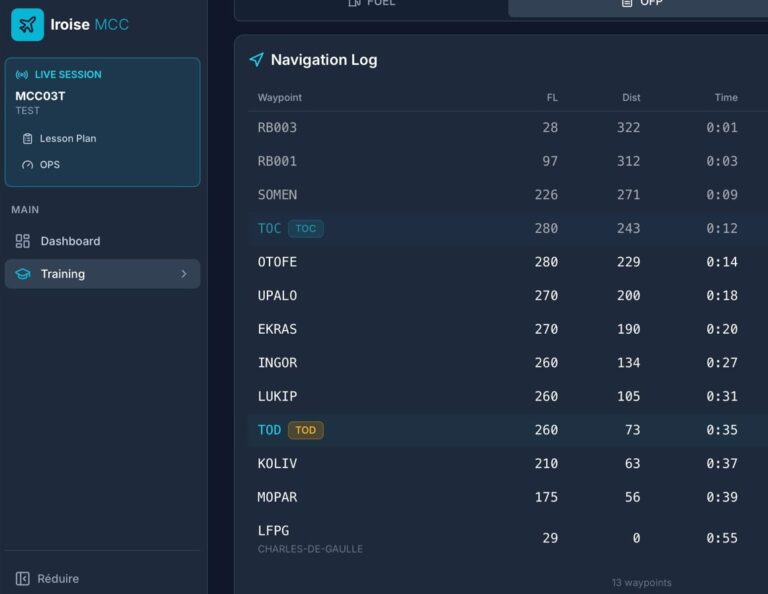
As the training progresses, sessions evolve into LOFT — Line Oriented Flight Training. You fly complete scenarios in real time, with events triggered throughout the flight. The instructor no longer interrupts. They observe and take notes.
This is where you discover how you really react under pressure: workload management, communication with your sim partner, decision-making when multiple problems hit at once.
The debriefing: session review
After the session, back to the briefing room. The instructor reviews what happened: what worked, what went wrong, errors to correct.
The format varies by school. At many ATOs, it’s fairly directive: the instructor gives feedback, you listen, you take notes. It lasts 15 to 30 minutes, sometimes less if the session went well.
APS-MCC training day: progression over 10 sessions
The APS-MCC follows a logical competency build-up:
- Sessions 1-3: Normal procedures, basic coordination, aircraft and SOP familiarization.
- Sessions 4-5: Abnormal procedures, failure management, more complex scenarios.
- Sessions 6-9: Full LOFT with advanced handling, automation, diversions, time-pressured decisions.
- Session 10: Final assessment (EASA source). A complete flight where you must demonstrate proficiency in all 9 EASA competencies.
Each session builds on the previous one. If you don’t work between sessions, it shows.
What we do at Iroise
At Iroise Aéro Formation, we’ve structured the training to go beyond the standard.
Dedicated e-learning before each session. The day before each simulator session, you get access to a specific e-learning module that prepares you for what you’ll work on the next day. These topics are then revisited and deepened during the briefing with the instructor. You arrive already knowing what it’s about — the briefing consolidates, it doesn’t introduce.
SBT scenarios (Scenario-Based Training). From session 4 onwards, all flights are scenarios built like real-world situations. Not isolated exercises (“we’re going to do a hydraulic failure”), but complete flights where events unfold as they would on the line. You know the general flight framework — airports, weather, context — but not the exact scenario. You don’t know what will happen, or when. The goal: build your resilience, adaptability, startle effect management, and ability to distribute workload within the crew.
True CBTA approach with facilitation. With us, the debriefing isn’t a monologue where the instructor tells you what was good or bad. It’s structured facilitation. The instructor guides you with open questions: “What worked well?”, “What would you do differently?”, “How do you think you handled that situation?” Each question is based on observable behaviors identified during the session. You learn to self-assess, to put words on what happened, to build your own progression plan. That’s how we train pilots who can keep improving on the line — not pilots who wait to be told what to think.
Night sessions (scheduling permitting). We try to schedule at least one night session — between midnight and 6 AM. The main objective: build your resilience. When you’re tired, your vigilance drops, your communication degrades, your reaction threshold changes. This is exactly what you’ll experience on the line during your first night flights or at the end of a rotation — and it’s also common during airline training, where simulator slots are often scheduled at night. Better to face it now, with an instructor beside you, than to discover it during your type rating.
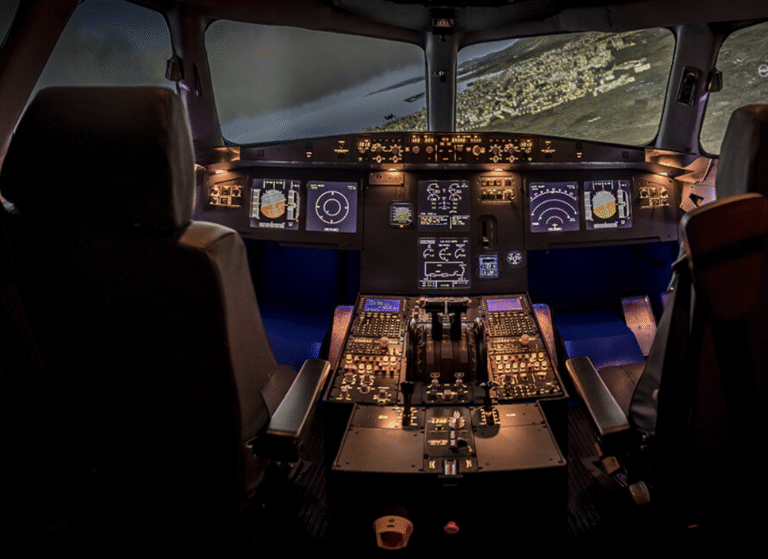
Structured format. Each session follows the same format: 1h30 briefing, 4h on FNPT II-MCC A320 simulator, 30 minutes structured debriefing. Instructors are TRIs and active airline pilots.
If you’re still unsure whether to choose MCC or APS-MCC, read this article first.