APS-MCC: How to prepare before your course

APS-MCC : How to prepare before your course

In brief

  • The APS-MCC is an intensive course: ground school followed by 40 hours of simulator over 2-3 weeks. Arriving prepared changes everything.
  • Three areas to focus on: Technical (aircraft systems, FMS, flows), ATPL revision (OPS procedures — minima, fuel, alternate selection, performance, weight & balance) and Human Factors (CRM, decision-making, human error).
  • Reading documentation beforehand to get familiar: yes. Practising alone without having had any instruction: no.
  • If your ATO provides CBT or e-learning, work through it seriously — it’s structured training content.
  • Goal: arrive on day 1 with the logic understood so you can focus on what really matters — working as a crew.

Why preparing for your APS-MCC changes everything

The APS-MCC is not an observation course. It’s intensive training where every session counts.

Over 10 simulator sessions, you’ll need to learn a new aircraft, new procedures, a new way of working (PF/PM), and above all, learn to work as a crew. If you arrive discovering everything on day one, you’ll spend your first sessions catching up instead of developing your multi-crew skills.

Pilots who arrive prepared progress faster and finish the course at a significantly higher level. Those who wing it catch up — sometimes. But they miss out on part of the training’s value.

Aircraft systems: the big picture, not the details

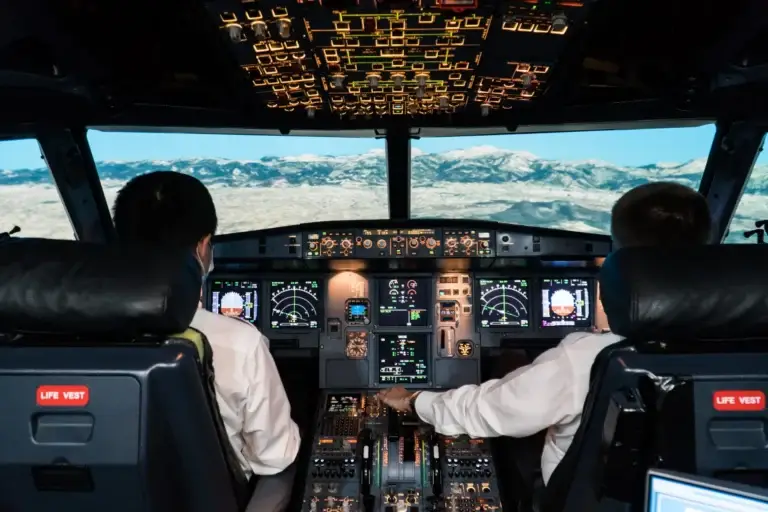
The APS-MCC takes place on an airliner simulator — usually A320 or B737. But it’s not a mini type rating. The goal is not to know every system and failure procedure by heart.

EASA regulations (AMC FCL.735.A) are clear: the expected level of systems knowledge should be “sufficient for effective situational awareness during execution of procedures and checklists”. Nothing more.

What you need to understand in broad terms

  • The aircraft’s various systems: which ones exist, how they work generally, what they’re for. Not the detail of valves, relays, or failure logic.
  • How the autopilot and autothrust work: modes, general logic of arming and engagement.
  • Operating limitations, configuration speeds, performance — all of this will be covered during the course.

How to work

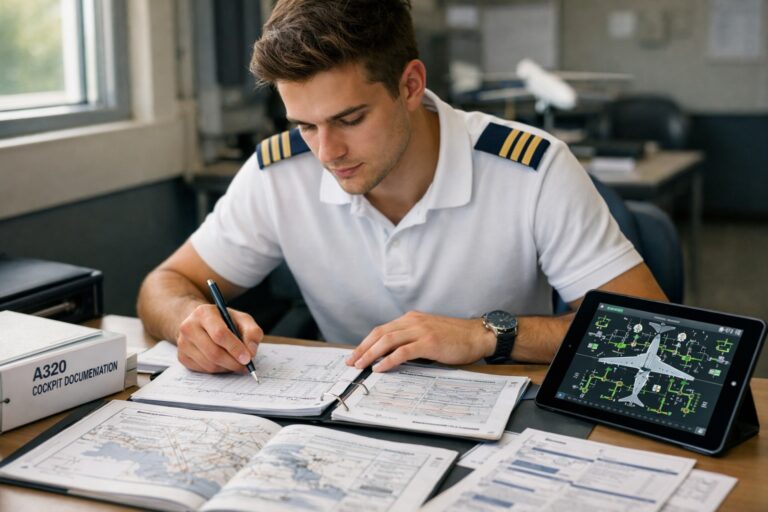
If your ATO provides CBT or LMS content, work through it seriously. It’s content specifically created for your training.

If your ATO only provides raw documentation (FCOM, system manuals), read it to familiarise yourself. Learn the document structure, start understanding how the aircraft works overall. But don’t force memorisation — that’s not what’s expected at this stage.

The goal: arrive with an overview. The detailed level will come during the course and later with your type rating.

ATPL revision: what will actually be useful

You’ve passed your 14 subjects. But let’s be honest: some of it is already hazy or forgotten. Certain subjects will directly apply in the APS-MCC.

  • Human Factors — CRM, SHELL model, workload management, cognitive biases, communication, decision-making. This is the core of the APS-MCC.
  • Operational Procedures — operating minima, fuel requirements, alternate accessibility and selection, approach chart reading. You’ll prepare and brief every flight using these.
  • Operational Meteorology — reading METARs/TAFs, icing conditions, impact on minima. Weather preparation is part of every session.
  • Performance and weight & balance — general principles. Detailed calculations will be covered in training.

SOPs, flows and FMS: understand first, practise later

This is where the difference shows between a prepared trainee and one who struggles. But be careful: preparing doesn’t mean training alone without a framework.

Understanding PF/PM logic

In initial training, you did everything yourself: decide, execute, verify. In multi-crew, the roles are separated.

The Pilot Flying (PF) manages the flight path: they fly, decide on configurations, give the commands. The Pilot Monitoring (PM) handles everything else: radio, checklists, FMS programming, and above all, monitoring the PF.

You’ll alternate between both roles on every flight. You need to understand both.

Flows and checklists

On light aircraft, you typically use a do-list: you read each item and execute it. On airliners, it’s different: you first execute a “flow” (a memorised sequence of actions), then verify with a checklist.

Example: before takeoff, the PM executes the “before takeoff” flow (strobes, AP modes armed, transponder, etc.), then calls the checklist to confirm everything is done.

Same logic for the FMS/MCDU: you need to understand what it’s for, what the main pages are, what order data is entered. Not memorise a sequence of keystrokes.

The trap of unguided preparation

You often read this advice: “Buy a cockpit poster and practise your flows at home.” Or: “Watch YouTube tutorials on the MCDU and practise on a trainer.” It’s tempting, and it’s not useless — but you need to know how far to go.

Getting familiar with these resources, having a first look at what it’s like, understanding the general logic: yes. Going all in, memorising sequences, practising intensively: no.

Why? Because without having had instruction, you risk misunderstanding or learning incorrect things. Tutorials are often based on consumer simulators that aren’t perfectly accurate to the real type. Your ATO’s simulator may also have its own particularities. If you memorise sequences without understanding the logic, you embed errors that will need correcting later. And unlearning is harder than learning.

The exception: if your ATO provides training material — online courses, SOP guides, dedicated MCDU trainer — then yes, use it fully. It’s designed for their course, validated by their instructors, consistent with what you’ll see in the simulator. There, you can practise safely. Otherwise, stick to familiarisation, not memorisation.

The question of perspective

In theory, some external resources can be excellent — a tutorial made by an experienced TRI, for example. But in practice, how do you know? A trainee who hasn’t yet done the course doesn’t have the perspective to judge whether a resource is reliable or not. You don’t yet know what you don’t know.

That’s why the prudent rule is simple: trust what your ATO provides — it’s their responsibility to give you content suited to their programme and their simulator. External resources, use them to familiarise yourself, not to train.

What this means in practice

If your ATO provides e-learning or CBT explaining SOPs, flows and FMS, work through them seriously. That’s the foundation. Once you’ve understood the logic through this structured framework, you can practise with the tools provided (mock-up, VPT, poster, FMS trainer).

If your ATO only provides raw documentation, read it to familiarise yourself. Learn the structure, understand the general logic. But don’t force practice until you’ve had instruction.

If your ATO provides nothing and tells you to “figure it out”, that’s a red flag.

CRM in practice

In the sim, CRM means: verbalising what you’re doing, listening to your partner, saying “I disagree” when necessary, accepting correction without getting defensive. If you’re used to flying solo, the transition to crew can be unsettling. Prepare yourself mentally.

The right mindset

The APS-MCC isn’t just an exam to pass. It’s training to experience. Mistakes are part of the process.

Arrive with the intention to learn, not to prove yourself. The pilots who progress fastest are those who listen, adapt, and genuinely work as a team.

Sim partner and logistics

Working with your sim partner

You’ll spend 10 sessions with the same person. If you know them beforehand, suggest working together: review the documentation, discuss unclear points. Even a few hours of joint preparation changes the dynamic. If you don’t know them yet, exchange messages as soon as you make contact about your levels and areas of discomfort.

Arriving in the right condition

The APS-MCC is demanding: 2-3 intensive weeks. Arrange accommodation close to the centre, clear your other commitments, prepare your administrative documents.

During the course: sleep enough, eat properly, avoid late nights. This is the time to learn, not to test your resistance to fatigue.

Key takeaways

Preparing before the APS-MCC is essential. But preparing intelligently is different from “figuring it out alone”.

Read the documentation to familiarise yourself. Work through the CBT if your ATO provides it. Revise the useful ATPL subjects. Prepare your CRM mindset. External resources can help you get an initial view — but without the perspective to judge their reliability, stay cautious: familiarise yourself, don’t train on them.

And choose an ATO that gives you a real training framework — not just files and goodwill.

Related article: APS-MCC: what a typical training day looks like


What we offer at Iroise Aero Formation

At Iroise, we believe preparation is part of the training.

  • LMS with dedicated courses to complete before arrival: A320 systems modules (5h), CRM (5h), SOPs, dedicated preparation courses — real courses with integrated assessments, not raw documentation. You understand the logic before you arrive.
  • Briefings that consolidate e-learning: What you worked on alone is reviewed with the instructor. We check your understanding, correct any misinterpretations before moving to practice.
  • Tools provided: Cockpit poster, FMGC trainer, VPT. Once you’ve understood through the courses, you can practise with the right tools.


The goal: that you arrive prepared with the right foundations, progress quickly, and finish the course at a level that makes you genuinely employable.
APS-MCC: What Does a Typical Training Day Look Like

APS-MCC : What Does a Typical Training Day Look Like

In brief

  • One APS-MCC session = briefing + 4h simulator + debriefing
  • 10 sessions total to reach the required 40 hours
  • Progression from procedural (sessions 1-3) to realistic LOFT (sessions 4-10)
  • Final assessment on the 9 EASA competencies
  • At Iroise: preparatory e-learning before each session, SBT scenarios, CBTA debriefing with facilitation, night sessions when scheduling allows

Before you arrive: flight preparation

The briefing has a fixed time. But your day starts earlier.

At most ATOs, you receive the flight details in advance: airports, weather, mass and balance, NOTAMs. You prepare your flight as you would at an airline. You calculate fuel, brief the approaches, anticipate constraints.

If you show up unprepared, you waste time. And more importantly, you miss the chance to practice what will be your daily routine on the line: ground preparation.

The briefing: setting the framework

The briefing aligns everyone before entering the simulator. The instructor reviews the session objectives, the situations to be worked on, the key focus areas.

With your sim partner, you confirm role distribution. You review SOPs. You ask questions. If weaknesses were identified in previous sessions, this is the time to address them.

By the end of the briefing, you should know exactly what’s expected of you.

In the simulator: from procedural to LOFT

The first sessions are typically procedural. You learn flows, callouts, basic coordination. The instructor intervenes, corrects, may pause to explain.

As the training progresses, sessions evolve into LOFT — Line Oriented Flight Training. You fly complete scenarios in real time, with events triggered throughout the flight. The instructor no longer interrupts. They observe and take notes.

This is where you discover how you really react under pressure: workload management, communication with your sim partner, decision-making when multiple problems hit at once.

The debriefing: session review

After the session, back to the briefing room. The instructor reviews what happened: what worked, what went wrong, errors to correct.

The format varies by school. At many ATOs, it’s fairly directive: the instructor gives feedback, you listen, you take notes. It lasts 15 to 30 minutes, sometimes less if the session went well.

APS-MCC training day: progression over 10 sessions

The APS-MCC follows a logical competency build-up:

  • Sessions 1-3: Normal procedures, basic coordination, aircraft and SOP familiarization.
  • Sessions 4-5: Abnormal procedures, failure management, more complex scenarios.
  • Sessions 6-9: Full LOFT with advanced handling, automation, diversions, time-pressured decisions.
  • Session 10: Final assessment (EASA source). A complete flight where you must demonstrate proficiency in all 9 EASA competencies.

Each session builds on the previous one. If you don’t work between sessions, it shows.

What we do at Iroise

At Iroise Aéro Formation, we’ve structured the training to go beyond the standard.

Dedicated e-learning before each session. The day before each simulator session, you get access to a specific e-learning module that prepares you for what you’ll work on the next day. These topics are then revisited and deepened during the briefing with the instructor. You arrive already knowing what it’s about — the briefing consolidates, it doesn’t introduce.

SBT scenarios (Scenario-Based Training). From session 4 onwards, all flights are scenarios built like real-world situations. Not isolated exercises (“we’re going to do a hydraulic failure”), but complete flights where events unfold as they would on the line. You know the general flight framework — airports, weather, context — but not the exact scenario. You don’t know what will happen, or when. The goal: build your resilience, adaptability, startle effect management, and ability to distribute workload within the crew.

True CBTA approach with facilitation. With us, the debriefing isn’t a monologue where the instructor tells you what was good or bad. It’s structured facilitation. The instructor guides you with open questions: “What worked well?”, “What would you do differently?”, “How do you think you handled that situation?” Each question is based on observable behaviors identified during the session. You learn to self-assess, to put words on what happened, to build your own progression plan. That’s how we train pilots who can keep improving on the line — not pilots who wait to be told what to think.

Night sessions (scheduling permitting). We try to schedule at least one night session — between midnight and 6 AM. The main objective: build your resilience. When you’re tired, your vigilance drops, your communication degrades, your reaction threshold changes. This is exactly what you’ll experience on the line during your first night flights or at the end of a rotation — and it’s also common during airline training, where simulator slots are often scheduled at night. Better to face it now, with an instructor beside you, than to discover it during your type rating.

Structured format. Each session follows the same format: 1h30 briefing, 4h on FNPT II-MCC A320 simulator, 30 minutes structured debriefing. Instructors are TRIs and active airline pilots.

If you’re still unsure whether to choose MCC or APS-MCC, read this article first.

APS-MCC: A320, B737 or Generic Simulator — Which One to Choose?

APS-MCC: A320, B737 or Generic Simulator Which One to Choose?

Key takeaways:

  • Generic: EASA-compliant, but doesn’t prepare you for real SOPs — not enough for airline assessments
  • A320: the most relevant choice for most European airlines (easyJet, Transavia, Vueling, Air France, Volotea…)
  • B737: makes sense if Ryanair is your main target
  • A320 vs B737: two different philosophies, neither is easier than the other
  • The real criterion: a type-representative simulator, not a generic one

Introduction :

You’ve decided to do an APS-MCC. Now you’re seeing offers on A320, others on B737, and some on “generic large jet simulators” — or even FFS. Prices vary wildly, and so do the sales pitches. And on forums, everyone has a different opinion.

Does it really matter? Yes. And more than you’d think.

APS-MCC: What EASA Regulations Say About the Simulator

The APS-MCC is governed by AMC2 FCL.735.A (EASA Decision ED 2017/022/R). The technical requirements for the simulator are specific:

Criterion EASA Requirement
Aircraft simulated Multi-pilot, multi-engine, ≥50 passengers
Aerodynamics Swept-wing jet
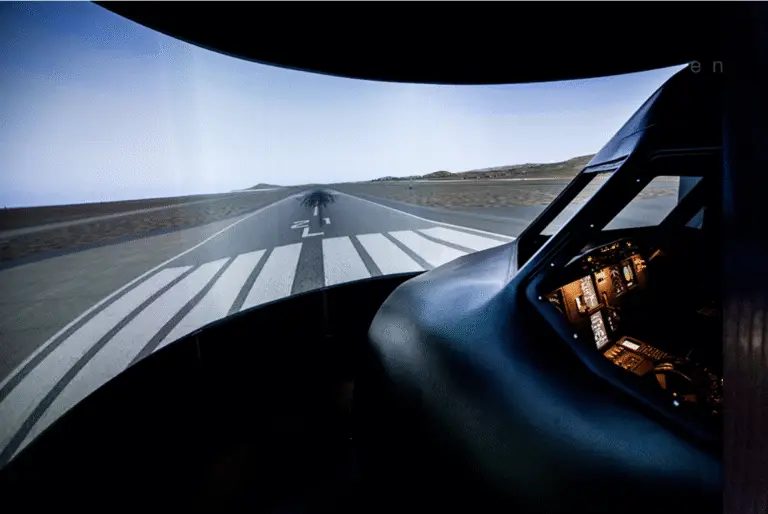
Visual system ≥180° horizontal × 40° vertical
Systems Representative of the aircraft class

Source : AMC2 FCL.735.A, paragraphs (f) et (g)

A generic simulator can tick all these boxes. But EASA-compliant doesn’t mean useful for preparing an airline selection.

APS-MCC A320 B737 or Generic: What Really Changes

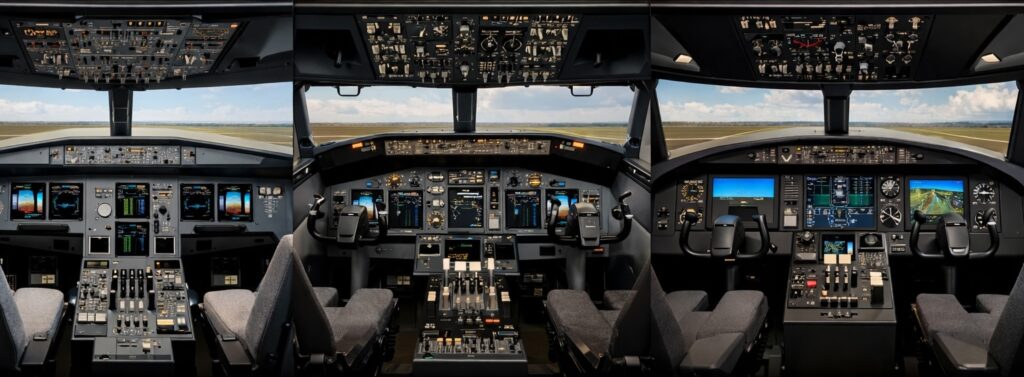
A320 Type-Representative

Cockpit faithful to Airbus logic:

  • Sidestick, full fly-by-wire
  • Flight protections (the aircraft rejects extreme inputs)
  • Automatic trim
  • ECAM for failure management
  • FMGS (Flight Management and Guidance System)

Airbus philosophy: The aircraft protects the crew.


B737 Type-Representative

Cockpit faithful to Boeing logic:

  1. Yoke with force feedback
  2. Conventional controls (cables + hydraulics)
  3. Manual trim (“pickle switch” on the yoke)
  4. No flight protections in the Airbus sense

Boeing philosophy: The pilot decides, the aircraft executes.


Generic “Large Jet”

  • Cockpit inspired by the A320 or B737, sometimes hybrid, without manufacturer data
  • Simplified or hybrid systems
  • Generic SOPs, rarely detailed, not manufacturer-specific

What you learn: Crew coordination (CRM, call-outs, PF/PM task sharing). But not the aircraft-specific logic.

Criterion A320 B737 Generic
Controls Sidestick, FBW Yoke, conventional Variable
Trim Automatic Manual Variable
Flight protections Yes No No or simplified
SOPs Airbus FCOM Boeing FCOM Generic
A320 selection prep ✅ Direct ⚠️ Requires adaptation ❌ Insufficient
B737 selection prep ⚠️ Requires adaptation ✅ Direct ❌ Insufficient
EASA-compliant ✅ Yes ✅ Yes ✅ Yes
Average price €5,000–6,500 €5,000–6,500 €3,500–4,500

Important: A320 and B737 represent two different philosophies, not a difference in difficulty. Neither is “more educational” than the other. Switching from one to the other requires adaptation — in both directions.

Why You Should Avoid a Generic Simulator for Your APS-MCC

Generic is cheaper. That’s its only advantage.

The problem: in airline assessments, you’ll almost always be evaluated on the type operated — A320 or B737. Sometimes on another aircraft from the same manufacturer (A330, B787…). Never on a hybrid cockpit with generic SOPs.

What you miss with an APS-MCC on a generic simulator:

The type-specific habits (call-outs, sequences)

The manufacturer logic (how the aircraft reacts, and why)

The reflexes that make the difference on the day

A candidate who completed their APS-MCC on a type-representative A320 arrives at an easyJet or Volotea assessment with 40 hours of practice using the right logic and the right SOPs. Someone who trained on a generic simulator starts from scratch.

How to Choose Between A320 and B737 for Your APS-MCC

Targeting a European airline → A320 in most cases. It’s the most operated aircraft in Europe: easyJet, Transavia, Vueling, WizzAir, Air France, Volotea, and many more.

Targeting Ryanair specifically → B737. Ryanair operates exclusively Boeing 737s and runs its selections on this type.

Not sure yet → A320. It’s the most operated family in Europe. The installed fleet is much larger than the B737, so there’s a higher chance your first selection will be on this type.

Doing your APS-MCC on one type and your selection is on the other? Don’t panic. It’s manageable, but expect around ten hours of preparation to learn the new logic.

What We Offer at Iroise

  • APS-MCC on FNPT II MCC A320 type-representative:
  • Cockpit aligned with Airbus logic (sidestick, FBW, ECAM, FMGS)
  • 180° × 40° visual system compliant with AMC2 FCL.735.A
  • TRI/TRE instructors currently active in airlines
  • Why the A320? Because it’s the aircraft most of our trainees face in their first selection.

À lire aussi

  • MCC or APS-MCC: Which Training to Choose in 2026?
  • How to Choose Your ATO for APS-MCC: 5 Mistakes to Avoid
  • The 9 EASA Competencies Assessed in Airline Selections
  • Regulatory reference: Download the official document: AMC2 FCL.735.A — EASA Decision ED 2017/022/R
Simulateur APS-MCC A320 B737 cockpit comparaison

The 9 EASA Pilot Competencies: What Airlines Really Assess

The 9 EASA Pilot Competencies : What Airlines Really Assess

Key takeaways:

  • The aviation industry has moved away from task-based training (repeating manoeuvres) to CBTA (competency-based training)
  • Airlines train their pilots through EBT, based on real accident and incident data
  • EASA has defined 9 behavioural competencies assessed throughout a pilot’s career
  • Each competency is graded on a 1-5 scale — the expected standard is 3
  • These competencies are assessed from airline selection onwards — not just after you’re hired
  • Training on these standards during your APS-MCC means you arrive at selection with the right mindset

CBTA EBT ?

You think airlines hire pilots who “know how to fly”? It’s more complicated than that.

For several years now, the aviation industry has changed how it trains pilots. It no longer assesses your ability to execute manoeuvres. Instead, it develops and assesses 9 behavioural competencies defined by EASA.

This is called CBTA (Competency-Based Training and Assessment) — a competency-based training method. Airlines use it to train their crews through EBT (Evidence-Based Training). And since they train their pilots on these competencies, they also recruit on these competencies.

The result: you’ll encounter these 9 competencies in selection, in type rating, and throughout your entire career. Time to understand what they’re about.

The old method: repeating manoeuvres

For decades, training was based on a simple principle: repeat exercises until you master them. Rejected takeoff, engine failure, ILS approach, go-around. You execute, the instructor validates, you move on.

The problem: this method dates from the 60s-70s. It was designed for aircraft that were prone to failures.

Modern cockpits are different — more automated, more reliable, more complex. Accidents have changed too. They’re no longer caused by mechanical failures, but by human errors: poor communication, loss of situational awareness, poor workload management. Repeating the same manoeuvres doesn’t prepare you for the unexpected.

The new method: assessing what you actually do

CBTA (Competency-Based Training and Assessment) changes the approach and starts from a simple observation: a good pilot isn’t someone who can execute a list of exercises — it’s someone who masters a set of competencies they can apply in any situation.

Instead of repeating manoeuvres, the instructor observes your behaviours in real situations. These behaviours are called Observable Behaviours (OBs). They’re concrete, measurable actions linked to 9 EASA-defined competencies: communication, situational awareness, decision-making, workload management, leadership, etc.

Example: during a flight with degraded weather and high ATC workload, the instructor doesn’t assess whether you “completed the approach”. They observe whether you briefed your copilot clearly, anticipated threats, distributed the workload, adapted your communication to the context.

Assessment is based on three dimensions:

  • How many expected behaviours you demonstrate
  • How often you demonstrate them
  • The combination of both = your competency level (1-5 scale)
Approach What's assessed How Limitation
Task-based (old) Ability to execute manoeuvres Checklist of passed/failed tasks Doesn't prepare for the unexpected
CBTA (new) 9 behavioural competencies Observation of OBs in real situations Applicable to any situation

In CBTA, we no longer ask “did they complete the manoeuvre?” but “did they demonstrate the right competencies to handle this situation?”

EBT: the airline method

EBT (Evidence-Based Training) is the application of CBTA to recurrent training in airlines. It’s the method used by Air France, easyJet, Emirates, British Airways, Wizz Air and many others.

The principle: analyse data from accidents, incidents and flights to identify real threats. Then build training scenarios that develop the competencies needed to handle them.

Element Old method EBT
Base Fixed regulations Real operational data
Scenarios Repetitive exercises known in advance Realistic, non-briefed LOFT
Assessment Pass / Fail Analysis of demonstrated competencies
Objective Validate manoeuvres Develop resilience

EBT doesn’t try to make you pass an exam. It aims to make you capable of handling situations you’ve never seen before.

The 9 EASA competencies

Here are the 9 competencies defined by EASA. These are what’s assessed in training, selection, type rating and recurrent training.

Code Competency What it means
PRO Application of Procedures You apply procedures correctly, at the right time, even under pressure
COM Communication You communicate clearly with your crew and ATC, you listen, you confirm
FPA Flight Path Management - Automation You use automation effectively, you understand what the aircraft is doing
FPM Flight Path Management - Manual You fly manually with precision when necessary
LTW Leadership and Teamwork You work as a team, you take the lead or follow depending on the situation
PSD Problem Solving and Decision Making You identify problems, analyse options, make decisions
SAW Situational Awareness You maintain awareness of your current state and anticipate what's coming
WLM Workload Management You manage your workload, prioritise, delegate when needed
KNO Application of Knowledge You apply your technical knowledge when required

These competencies aren’t independent. Poor situational awareness (SAW) often leads to poor decisions (PSD). Workload overload (WLM) degrades communication (COM). Everything is connected.

The grading scale

In CBTA, each competency is assessed on a 1-5 scale.

Level Grade Instructor role
(teaching method)
Observable Behaviours (OBs) Outcome
How many How often Quality
Exceed 5 Exchange experience All Always Exemplary Ideal (safe, effective, efficient)
Proficient 4 Encourage further progress Most Regularly Effective Safe and effective
Consolidate 3 Facilitate self-learning Many Regularly Adequate Safe (skill test tolerances)
Practice 2 Teach and guide Some Occasionally Marginal Improvement required
Describe and apply 1 Explain and demonstrate Few Rarely Ineffective Improvement required
Not Observed 0 N/A

The goal isn’t to score 5 everywhere. The goal is to be at least 3 on all competencies — that’s the expected level for an operational pilot.

A grade of 2 triggers follow-up. A grade of 1 triggers mandatory remediation.

Why this matters from your APS-MCC

You might think: “CBTA/EBT is for airline pilots, not for me.”

Except airlines recruit on these competencies. They won’t wait until you’re with them to start assessing you. In selection, in assessment, in evaluation sims — it’s already CBTA.

If you arrive at selection having never worked on these competencies, you start with a handicap. You can be technically proficient and still get eliminated because your communication is unclear, your workload management is inconsistent, or your decision-making is hesitant.

The APS-MCC is the right time to start because it’s the beginning of your multi-crew experience: if it’s built on the same model as what you’ll experience in an airline, you arrive prepared.

What we offer at Iroise Aéro Formation

Our APS-MCC programme is deliberately aligned with these standards and the French Civil Aviation Authority has approved our training as “CBTA/EBT-compatible”. Iroise is one of the first and few schools in France to offer this training methodology.

In practice, this means:

  • Assessment on the 9 EASA competencies at every simulator session
  • Grading on the 1-5 scale with individualised tracking
  • Progressive LOFT scenarios based on real operational situations
  • Structured debriefings focused on observed behaviours, not just manoeuvres
  • Official final assessment compliant with EASA and CBTA standards


Our instructors are TRIs and SFIs from Air France, easyJet, Volotea, Swiss, Transavia. They know the standards because they apply them in airlines.

The idea isn’t to make you pass an exam. It’s to have you arrive at selection ready to perform as a first officer.

How to Choose Your ATO for APS-MCC: 5 Mistakes to Avoid

How to Choose Your ATO for APS-MCC: 5 Mistakes to Avoid

You’ve decided to do an APS-MCC. Good call. Now you need to find the best ATO APS-MCC for your needs. And that’s where many make the wrong choice.

Choosing your ATO matters as much as choosing between MCC and APS-MCC. A poorly delivered APS-MCC means money spent only to arrive “borderline” at selection. Here are the most common mistakes — and how to avoid them.


Mistake #1: Looking only at the price

An APS-MCC at €5,200, another at €8,000. The gap is significant. But the listed price doesn’t tell you much.

What matters is the real hourly cost. A €5,200 course for 60 hours works out at €87/h. A €6,400 course for 125 hours works out at €51/h. The second one costs more upfront, but you get twice as much for your money.

Also check what’s included. E-learning charged extra? Documentation billed separately? Exam fees on top? Some ATOs advertise a low headline price then add lines at the end.

Ask the question clearly: “What’s the all-inclusive price, no surprises?”


Mistake #2: Ignoring the actual training hours

The EASA minimum for APS-MCC is 40 hours of simulator. Many ATOs stop there. Total training: 60 to 80 hours including ground school (sometimes online!).

That’s enough for the certificate. Less so for feeling confident on the day.

What to look at:

  • Simulator hours: 40h is the floor. More is better.
  • Ground school: how many hours in the classroom? In person or online?
  • Briefings and debriefings: are they counted? Structured?
  • Additional tools: VPT, e-learning, Airbus documentation, iPads?

The difference between 60 and 125 total training hours is huge. It shows when you come out.


Mistake #3: Not checking instructor profiles

An instructor isn’t just someone who teaches you to fly. It’s someone who prepares you for what recruiters expect.

An active TRI at an airline knows current SOPs, selection trends, and the mistakes that get you eliminated. An instructor retired for 10 years sometimes teaches procedures that no longer exist.

Questions to ask:

  • What are the instructor profiles? TRI? SFI? Active or retired?
  • Which airlines do they come from and what’s their experience?
  • How long have they been teaching?

A good ATO answers without hesitation. A poor ATO stays vague.


Mistake #4: Overlooking the training methodology

You can do 40 hours of simulator and come out with an insufficient level. It all depends on how it’s done.

Airlines train their pilots using the CBTA/EBT approach (Competency-Based Training and Assessment / Evidence-Based Training). It’s competency tracking: your weak points are identified, worked on, and your progress is measured.

Most ATOs still use the old method: a list of exercises to tick off. You do the exercise, it’s validated, move on to the next. Whether you’ve actually mastered it doesn’t matter.

Ask how the training is structured:

  • Is there individualised follow-up?
  • Are scenarios LOFT-type (Line Oriented Flight Training)?
  • Is assessment continuous or just at the end?

If they answer “we follow the EASA programme”, it’s probably minimum compliance (see EASA documentation).


Mistake #5: Forgetting availability and actual duration

Some ATOs only have one or two sessions per year. You sign up in January, you start in September. In between, you lose months.

What to check:

Another trap: courses that drag on. What was planned for 4 weeks becomes 6, even 8. Simulator unavailable, instructor absent, session postponed. Every extra week adds costs: accommodation, transport, living expenses. The budget explodes.

  • Session frequency: every week? Every month? Twice a year?
  • Guaranteed duration: how long does the course last? Is it contractual?
  • Flexibility: can you reschedule if needed?

A serious ATO commits to a duration and sticks to it.


Checklist: how to find the best ATO for APS-MCC

Before signing, check these points:

CriteriaQuestion to ask
Price“What’s the all-inclusive rate?”
Volume“How many hours total? Simulator + ground + briefings?”
Instructors“What profiles? Active or retired? What experience?”
Method“CBTA/EBT approach or standard exercise checklist?”
Availability“How often are sessions? Guaranteed duration?”
Documentation“Official Airbus manuals or generic materials?”

A good ATO answers all of this clearly. If you sense vagueness, that’s a warning sign.


What we offer at Iroise

Our APS-MCC is 125 hours of training: 40 hours on FNPT II-MCC A320 simulator, 60 hours of ground school and briefings in person, e-learning modules, and 14 hours of VPT simulator as a bonus.

Our method follows the CBTA/EBT approach: LOFT scenarios, individualised competency tracking, continuous assessment. You learn to manage situations, not just execute exercises.

Our instructors are TRIs and SFIs from Air France, easyJet, Volotea, Swiss, Transavia — active or recently retired.

Sessions every two weeks in Brest, France. Price: €6,400, eligible for French CPF.

Discover the full programme →

MCC or APS MCC: Which Training Should You Choose in 2026?

MCC ou APS-MCC : Which Training Should You Choose in 2026?

In brief in this article:

  • The standard MCC (20h simulator) is no longer enough for airlines
  • APS-MCC is now the standard: 40h minimum + final assessment
  • Beware of “minimum regulatory” programs: not all APS-MCCs are equal
  • Key criteria: total training hours, instructor profile, teaching method
  • Budget: €5,200 to €8,000 — compare the price per hour, not the listed price

What the Regulations Say

MCC (Multi-Crew Cooperation) is a mandatory requirement for flying as part of a crew. The EASA minimum: 25 hours of theory, 20 hours of simulator. That gets you the certificate.

APS MCC (Airline Pilot Standard) goes further: 40 hours of simulator minimum and a final assessment. It’s no longer just a box to tick—it’s actual preparation for the airline pilot job.


Why Basic MCC No Longer Cuts It

20 hours of simulator sounds reasonable on paper. In reality, you spend half that time as PM (Pilot Monitoring). Result: 10 hours at the controls. Not enough to feel comfortable on a jet, let alone impress at a selection.

Airlines know this. That’s why almost all of them now require APS-MCC, or at minimum an MCC supplemented by a JOC (Jet Orientation Course). The problem with JOC: no regulatory framework, quality varies wildly between ATOs.


What APS-MCC Actually Gives You

Double the simulator time, for starters. 40 hours minimum means 20 effective hours at the controls. Enough to start building real automatisms.

A mandatory final assessment, where basic MCC ends with no level verification.

That’s the regulatory foundation. What each ATO builds around it makes all the difference.

Standard MCC or MCC/JOC APS-MCC (40-80h) APS-MCC (100h+) ⭐
Simulator hours 20h 40h 40h+
Total hours ~45h 60-80h 100-125h
Final assessment
Average price €3,500-4,000 €5,200-6,000 €6,000-8,000
Price per hour ~€80-90/h ~€75-85/h ~€55-65/h
Selection preparation ★☆☆ ★★☆ ★★★

The “Minimum Compliance” Trap

Warning: not all APS MCC programmes are equal. The EASA minimum is 40 hours of simulator. Many ATOs stop there, with a total of 60 to 80 hours of training.

That’s enough to get the certificate. Less so to arrive confident at selection. The feedback on pilot forums is clear: those who did the minimum often feel “borderline” when facing recruiter expectations.

Criteria That Make the Difference

When comparing programmes, look beyond the listed price.

Total training hours. 40 hours of simulator is the floor. But what else is included? Ground school, e-learning, structured briefings, preparation tools? The difference between 60 and 125 hours of total training is enormous.

Instructor profiles. An active TRI at an airline knows current SOPs and recruiter expectations. An instructor retired for several years may teach outdated procedures.

Training methodology. Airlines use the CBTA/EBT approach (Competency-Based Training and Assessment / Evidence-Based Training) for their recurrent training. Few ATOs apply this from the APS MCC stage—and it makes a real difference.

Tools and documentation. Official Airbus manuals or generic excerpts? Full EFB or paper briefings? These details matter for your familiarisation with the airline environment.

The Timing Question

Recruiters look at when you completed your training. A recent APS MCC (less than 6 months old) reassures them. Training from 2 years ago raises questions: are you still up to standard?

Ideally, plan your APS-MCC when you’re ready to actively apply. Look for an ATO with frequent sessions so you’re not waiting 3 months for a slot.

The Economics

A basic MCC costs between €3,500 and €4,000. An APS-MCC between €5,200 and €8,000. The gap is real, but basic MCC no longer gets you into airlines. The real choice is between different APS MCC programmes.

And there, the listed price doesn’t tell the whole story. An APS-MCC at €5,200 with online theory and 40 hours of simulator works out to around €80/h. An APS MCC at €6,400 for 125 hours in-person works out to €51/h. Not to mention that a failed selection because you weren’t ready costs far more.

Basic MCC remains relevant in some cases: business aviation, aerial work. If you’re aiming for an airline, APS MCC is the obvious choice.

What We Offer at Iroise

Our APS-MCC is 125 hours of training: 40 hours on FNPT II-MCC A320 simulator, 60 hours of in-person courses and briefings, e-learning modules and 14 additional hours on VPT simulator.

The difference: our programme follows the CBTA/EBT approach used by airlines. LOFT scenarios, individualised competency tracking, continuous assessment. You learn to manage situations, not just execute exercises.

Our instructors are TRIs and SFIs, all from Air France, easyJet, Volotea—active or recently retired.

Price: €6,400. Sessions every two weeks in Brest, France.